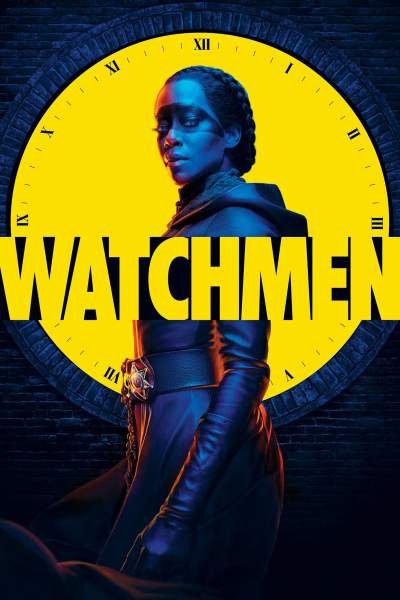
HBO's Watchmen: A Dazzling & Original Adaptation That Redefines the Franchise
Damon Lindelof's nine-episode
Watchmen series for HBO isn't just a television show; it's a profound cultural moment. Far exceeding the expectations of even the most devoted fans, this ambitious project didn't merely adapt Alan Moore and Dave Gibbons' seminal graphic novel but boldly reimagined its universe, setting a new standard for how beloved intellectual property can be revisited. From its visceral premiere to its thought-provoking conclusion, the series delivered a narrative that was simultaneously dazzling, dark, dense, shocking, and deeply heartbreaking, cementing its place as one of the most compelling dramas of its era. This isn't just an
Hbo Watchmen Series Review; it's an exploration of a show that dared to speak directly to the anxieties and complexities of contemporary society.
The series stands out for its consistent originality, with each episode unfolding a tapestry of memorable imagery, unexpected twists, and character-driven moments that resonate long after the credits roll. While it embraces the fantastic and super-heroic elements inherent to the *Watchmen* mythos, it grounds itself firmly as an adult drama, focusing on compelling characters and their intricately woven stories. Like the very best science fiction and fantasy, HBO's
Watchmen isn't just entertainment; it’s a mirror held up to today’s world, offering sharp, incisive commentary on American society at the turn of the 2020s.
A Bold New Chapter in the Watchmen Universe
The genius of HBO's
Watchmen begins with its foundational creative decisions, which set it apart from previous attempts to bring the graphic novel to the screen. Unlike Zack Snyder’s 2009 film, which offered a largely faithful, albeit flawed, adaptation, Lindelof’s vision opted for a different path. The show isn't a direct retelling but rather a continuation, set in the established *Watchmen* world approximately 34 years after the comic's original events, in 2019. This pivotal choice allowed the series to breathe, providing a fresh canvas for new narratives and explorations without being burdened by the near-perfect original source material. By not attempting to recreate what was already a masterpiece, the series carved out its own unique identity, proving that the *Watchmen* universe was ripe for expansion.
This chronological leap naturally led to a second brilliant decision: populating the narrative with an ensemble of predominantly new, original characters. This wasn't merely a creative choice; it was a necessity that paid dividends. Introducing fresh faces allowed the story to develop independently, exploring contemporary themes through lenses untainted by preconceived notions. When characters from the original comic *do* appear, their presence becomes a powerful, often surprising, moment of connection to the past, enriching the narrative rather than dominating it. This approach not only honored the legacy of the source material but also ensured the series stood proudly on its own two feet, offering a truly original experience for both longtime fans and newcomers.
Unpacking the Thematic Core: Racism and Societal Reflection
Perhaps the most impactful and courageous decision at the heart of HBO's
Watchmen was its choice to be profoundly *about* something, much like its predecessor, but with a drastically different focus. While the original comic deconstructed superhero tropes and explored Cold War fears of mutually assured annihilation, the 2019 series zeroes in on the searing issues of racism and the insidious dangers of white supremacy in America. This thematic pivot was tremendously powerful and gave the series an undeniable urgency and relevance.
The series immediately confronts viewers with its central theme, opening with a harrowing, historically accurate recreation of the 1921 Tulsa Race Massacre. This gut-wrenching sequence isn't just a historical footnote; it's the foundational trauma from which much of the show's narrative unfolds. Through this lens, the series meticulously unpacks the generational impact of racial injustice, exploring how historical wounds fester and manifest in contemporary society. It delves into police brutality, the masked identities of both heroes and villains, and the very concept of justice itself, all through the prism of racial inequality.
The show masterfully weaves these complex themes into its plot, using its fantastic elements to explore very real societal fissures. Characters like Angela Abar (played with astonishing depth by Regina King) become vehicles for examining black identity, trauma, and resilience. The series doesn't shy away from uncomfortable truths, forcing viewers to grapple with America's past and present, making it an essential piece of commentary on identity, power, and memory. This bold narrative choice makes the
Hbo Watchmen Series Review almost synonymous with a review of societal consciousness.
Beyond the Hype: Addressing Criticisms and Lasting Impact
While HBO's
Watchmen garnered widespread critical acclaim, it wasn't without its detractors. Some, like Lorraine Ali and Robert Lloyd from the Los Angeles Times, found the series to be "more manipulative than meaningful," suggesting it suffered from a "Lost problem" – a reference to Damon Lindelof's previous work, known for its intricate mysteries that some found convoluted. These criticisms often stemmed from the show's complex narrative structure, its reliance on flashbacks, and the sheer density of its thematic layers, which could, at times, feel overwhelming. For viewers unfamiliar with the original comic, or those expecting a more straightforward narrative, the show’s labyrinthine storytelling might have indeed presented a challenge, leading to questions like
HBO Watchmen: Is Lindelof's Critically Acclaimed Series Overrated?
However, for many, the very elements that some found manipulative were precisely what made the series so compelling. The mysteries served not as arbitrary plot devices, but as pathways to deeper character revelations and thematic explorations. The visual storytelling, from the striking cinematography to Trent Reznor and Atticus Ross's evocative score, immersed viewers in its unique world, enhancing the emotional impact of its difficult subjects. The performances, particularly from Regina King, Jeremy Irons, and Yahya Abdul-Mateen II, anchored the fantastical elements in raw, human emotion, making the heavy themes accessible and profoundly moving.
The lasting impact of HBO's
Watchmen lies in its fearlessness. It dared to tackle one of the most revered graphic novels of all time and transform it into something entirely new, relevant, and vital for its contemporary audience. It sparked crucial conversations about history, race, and justice, demonstrating the power of serialized storytelling to engage with profound societal issues. Whether viewed as an unqualified masterpiece or a challenging, imperfect work, the series undeniably left an indelible mark on television, proving that a truly great adaptation isn't about replication, but reinvention. Damon Lindelof has questioned whether he would be involved in a potential second season, and while the future of the series remains uncertain, these nine episodes will undoubtedly be treasured and rewatched for years to come, offering new insights with each viewing.
In conclusion, HBO's
Watchmen series is a phenomenal achievement in television, transcending its superhero origins to deliver a powerful, sophisticated, and deeply relevant drama. It's a testament to bold storytelling and creative courage, standing as a prime example of how to build upon a cherished legacy while forging an entirely new, unforgettable narrative. For anyone seeking television that provokes thought, stirs emotion, and challenges perspectives, this
Hbo Watchmen Series Review can confidently state: this series is an absolute must-watch.